The journey began, as near as I can confirm, when my fingers began tapping the keypad early in the morning on April 27, 2025.
I have no idea long how long the seed had been germinating in my mind, but that date shows up on the earliest draft I can find of my book on the life of Onesimus.
The first thing I suspect I wrote was a draft of chapter 1, because that part of the story had emerged in all the daydreaming and pre-thinking that led me to write the book. But it didn’t take me long to go from those few paragraphs to a ritual of researching, planning, writing, and editing, although seldom in any particular order.
By the time I stopped using it, the first several pages of that 71-page document included an outline for the story, notes on things I needed to research, and questions I wanted or needed to answer.
Then came about three pages of bullet point notes on the setting – everything I began to learn about what first-century Asia Minor in general and, more specifically, Colossae and its connection to other ancient cites like Laodicea, Hierapolis, and Ephesus.
My next section of notes covered research I did on slavery as it existed during the first century. I wanted to know things like how people became enslaved, how the slave trade worked, and what repercussions slaves faced if they ran away.
From sites like the British Museum, I learned, among many things, that Ephesus was a center for the Roman slave trade, that children at times (although it wasn’t super common) were sold into slavery by their parents to pay debts, and that some slaves, known as vicarri, had a high degree of autonomy and were responsible for other workers.
Along the way, I began some conversations with ChatGPT. I would ask it to tell me what daily life was like in first-century Rome, for instance, and then I would confirm what it told me by going to more reliable websites or books.
I also began putting dates next to my proposed chapter topics. Since there’s some debate over the precise dates of some events that happened that long ago, I had to settle on my version and stick to it throughout the book.
Finally, on Page 13 of the document, there’s a bold font notation that says, “Draft 1.0,” followed by the actual narrative that would become the book.
I worked in that document throughout the rest of 2025, then started a new document on January 2, 2026. This one had none of the background notes. It was just the story. There were roughly 10 more versions – meaning I created a new document and left the old one behind – before the manuscript was ready to send to my publisher.
By then I had spent dozens upon dozens of hours reading and writing, usually early in the mornings so I wasn’t taking away from work someone was actually paying me to do.
The British Museum website, as I said, had a wealth of information, much of it with citations to ancient authors. I also spent a good bit of time on travel websites, faith-based websites, university websites, and the websites of publications (like National Geographic) that often research and write on world history.
I also used online Bibles and commentaries, as well as several books I already owned or that I bought because they had something to say about the book of Philemon.
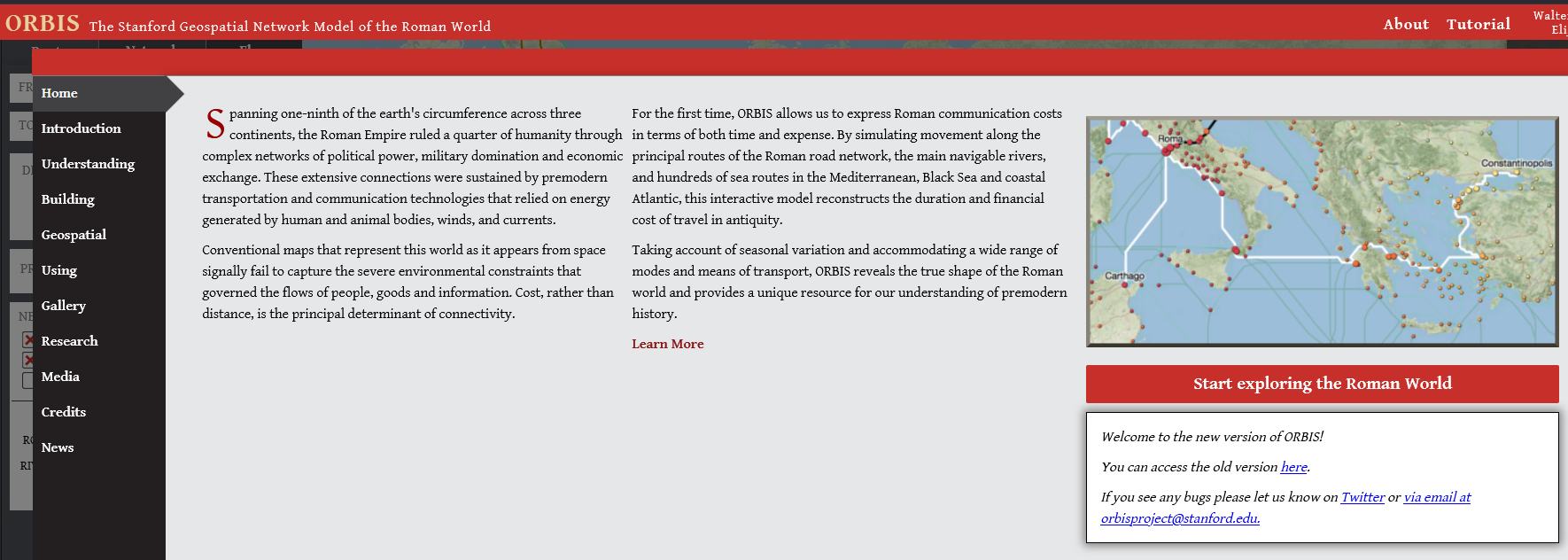
One of my favorite sources was orbis.stanford.edu, a website maintained by Stanford University that provides an interactive “Geospatial Network Model of the Roman World.” I confess that I nerded out far too much on that site. But, like Onesimus, it was useful.
What I liked most is that you can plug in a couple of cities, and it will estimate how long first-century travelers took to go from one to the other by different modes of transportation (by foot, by boat, etc.).
It told me, for instance, that in July you could walk from Smyrna to Ephesus in 2.4 days or 1.3 days on a horse or 1.4 days by boat along the coast. That type of information was particularly helpful when trying to accurately describe the different journeys Onesimus took during his fictionalized life.
Frankly, I got lost in the research at times. I’d start writing a chapter and begin to wonder what kitchens were like on a wealthy family’s estate in Colossae. Then I’d spend 30 minutes in a conversation with Chat GPT and another two hours reading various sources that helped me paint the picture of Philemon’s kitchen.
The downside of all that research was that early versions of the book read way too much like a history project. A couple of early readers pointed this out, and hopefully my subsequent revisions brought the fiction back into my historical fiction by allowing the descriptive facts to come out more naturally in the dialogue and narrative.
I continued to tweak and revise the story, with facts and fiction, until July 17, 2026, when I sent it to my publisher for their final review. Every time I read it, I saw something I thought would be better if I changed a word here or there, added more detail about some event, or moved some part of the story around.
Indeed, I needed the deadline from the publisher, otherwise I’d still be making edits. But while I know there will always be ways to make the story better, I am happy with how it turned out. And I totally enjoyed the journey.
Leave a Reply